

While everyone else is hunting setups from the open, this one is silent. It waits for the single moment the session hands over its liquidity — the overnight range being taken — and it is already positioned with entry, stop and three targets on the chart before the move that follows has begun.

Overnight, price builds a narrow range while the major desks are closed. Stops pile up on both sides of it — every breakout entered during the quiet hours leaves an order just beyond the edge.
When volume returns, that pool is the cheapest liquidity on the board and price goes to take it. The system is already there. It does not predict the turn and it does not need to — it waits for the sweep to finish and reads the candle that follows, which is the moment the move actually begins.
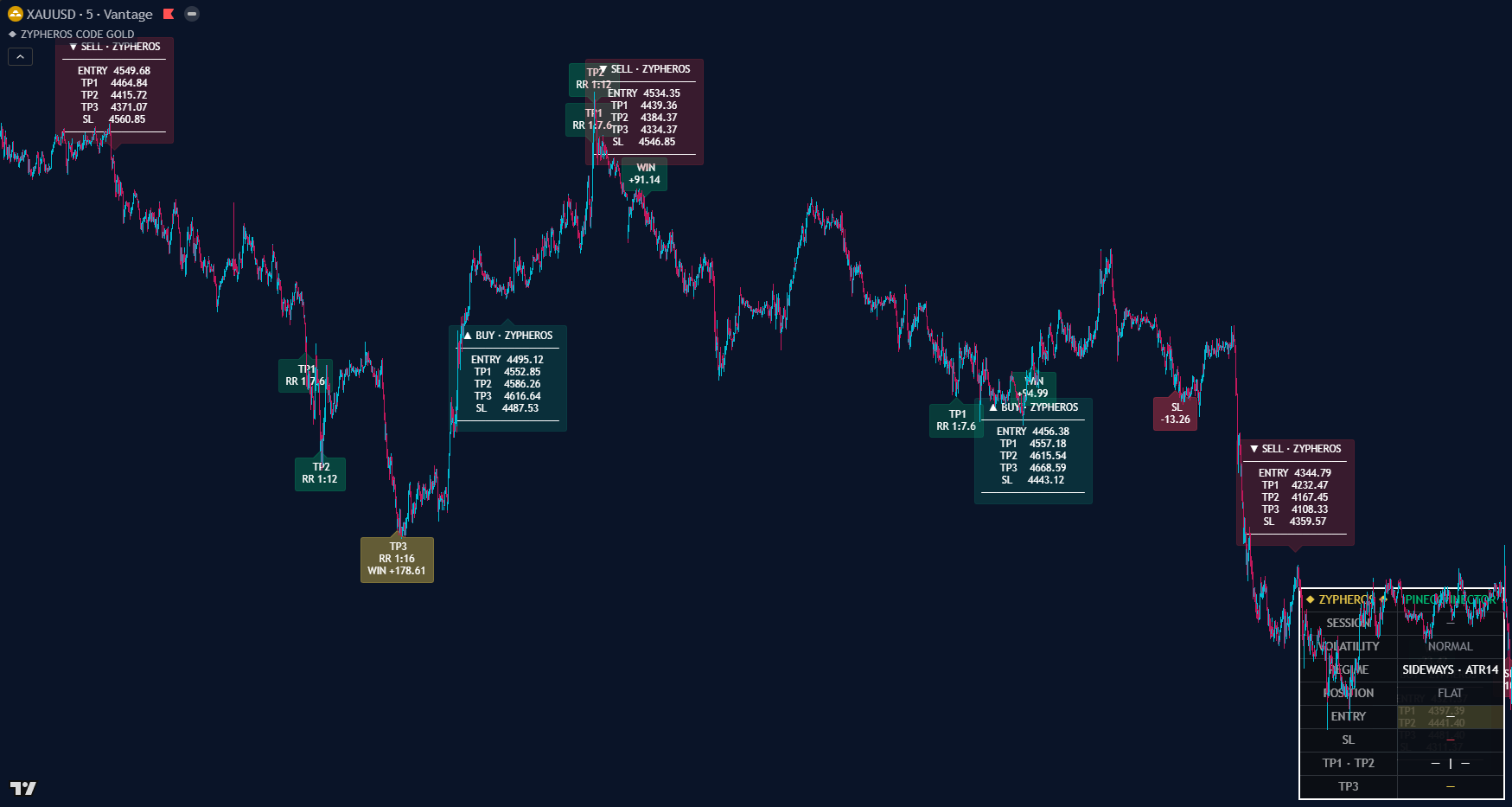
The New York open builds the same overnight range and the same reach for the stops beyond it. Nothing in the system changes — same sequence, same ladder, same management.
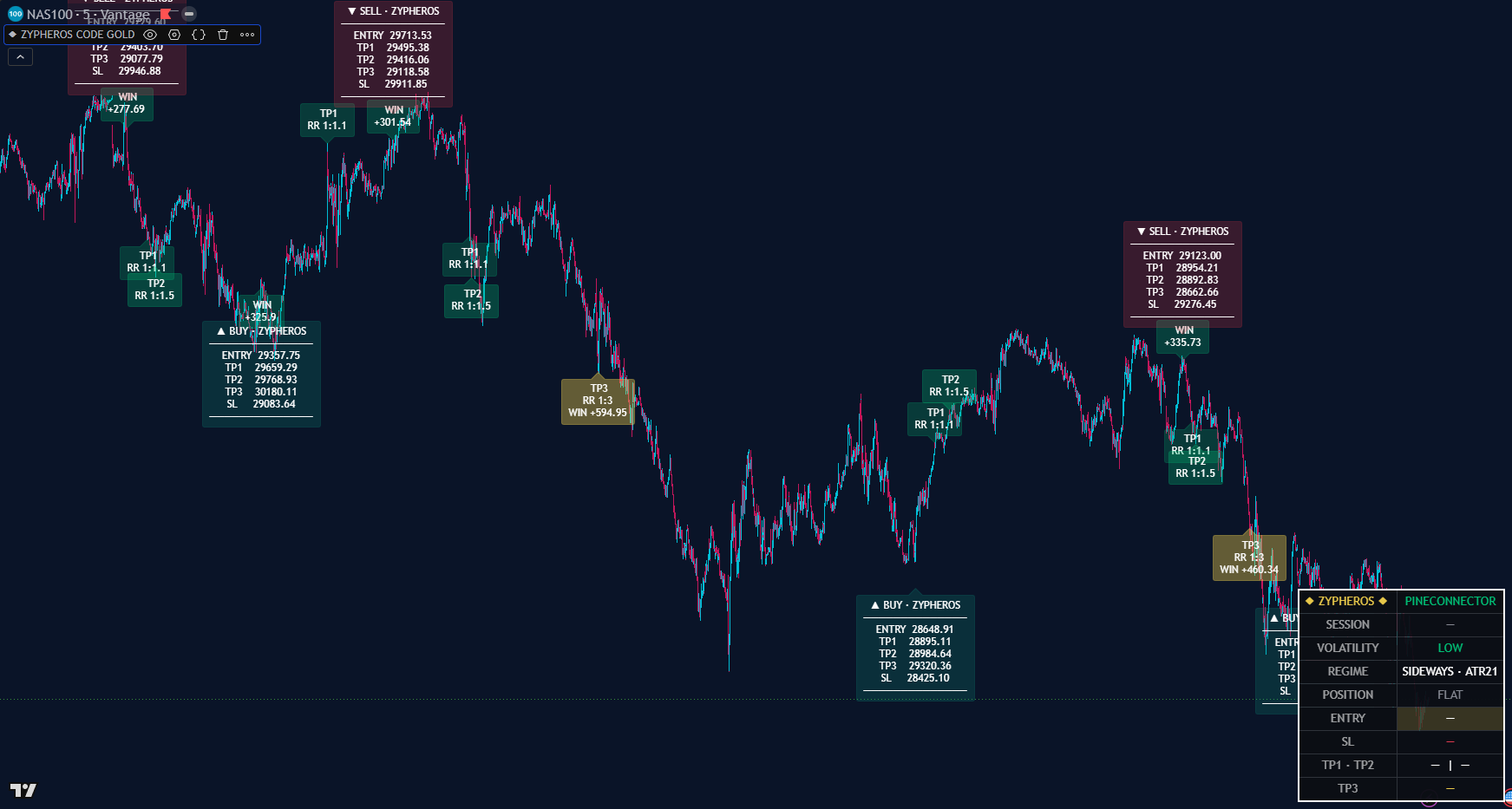
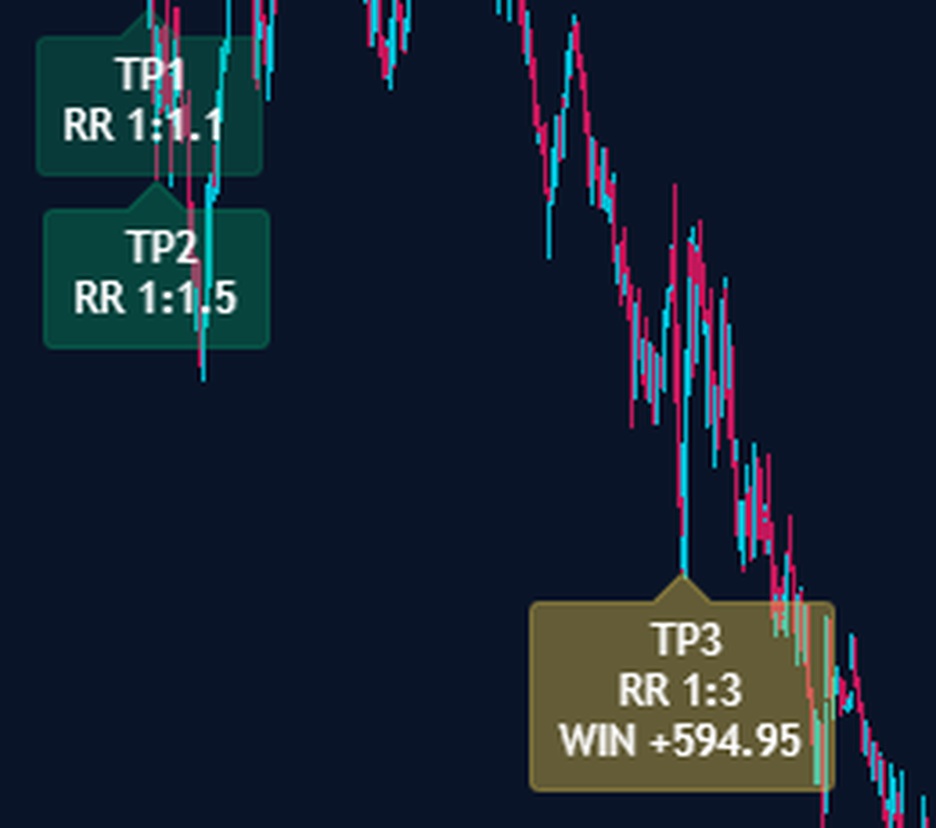
There is no partial credit and no discretion. A setup that satisfies four of five is discarded without comment. That selectivity is why every position it does open carries the full weight of the method behind it.
Overnight high and low are marked and frozen. Nothing is traded inside them — this is measurement, not opinion.
A fast average range is compared against a slow one. In a dead market the system stands down: a sweep nobody follows only pays the spread.
Price trades beyond the edge and into the stops resting there. This is the trigger — and the moment most traders are being removed from the market.
The candle must close back inside the range. A close beyond it is a genuine break, and the system refuses rather than fade real momentum.
Stop distance comes from measured volatility at that moment, size follows the stop, and all three targets exist before the position does.
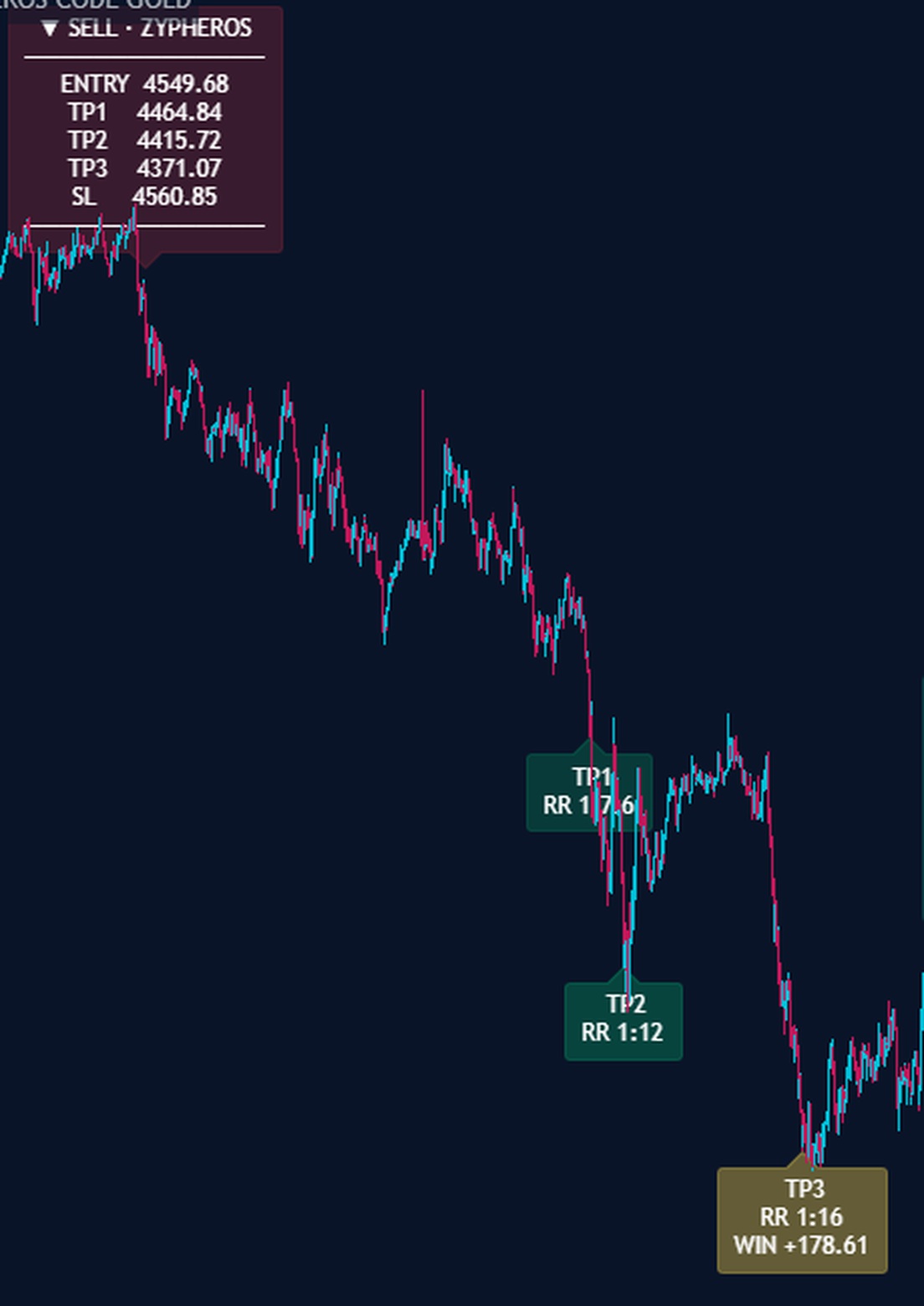
Entry, stop and all three targets appear on the candle that triggers the position. Nothing is added later, nothing is adjusted to look better. What you see in history is exactly what fired at the time.
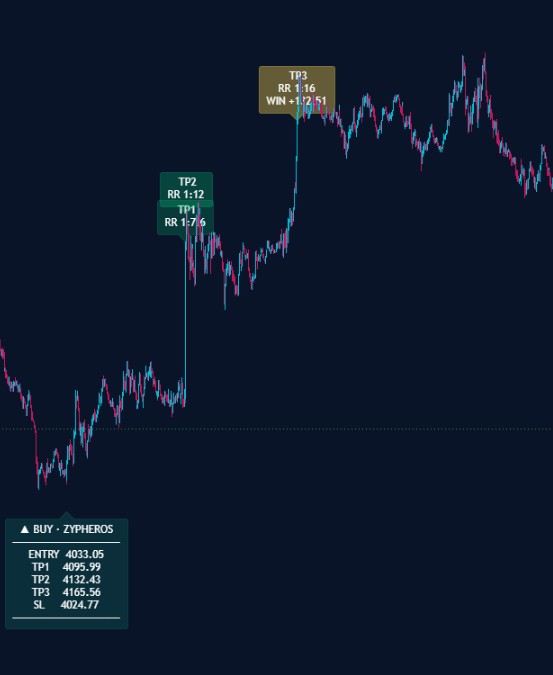
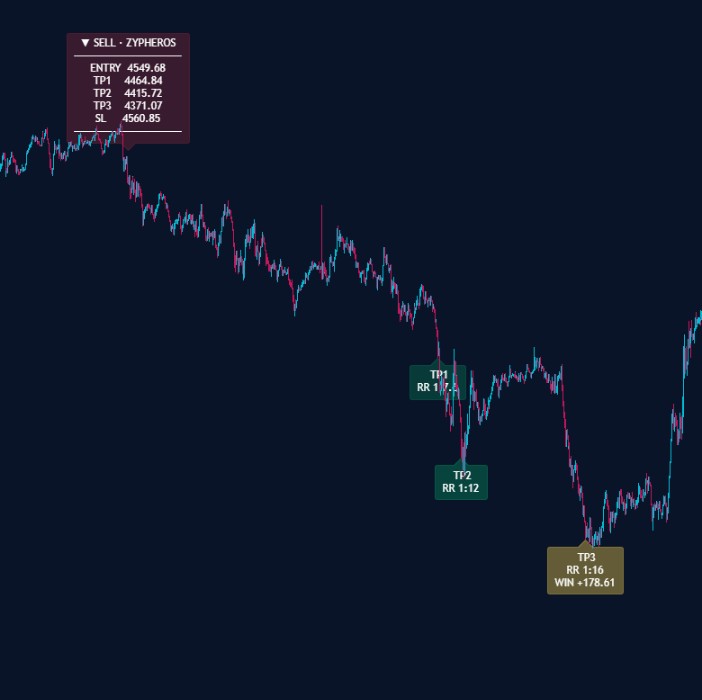
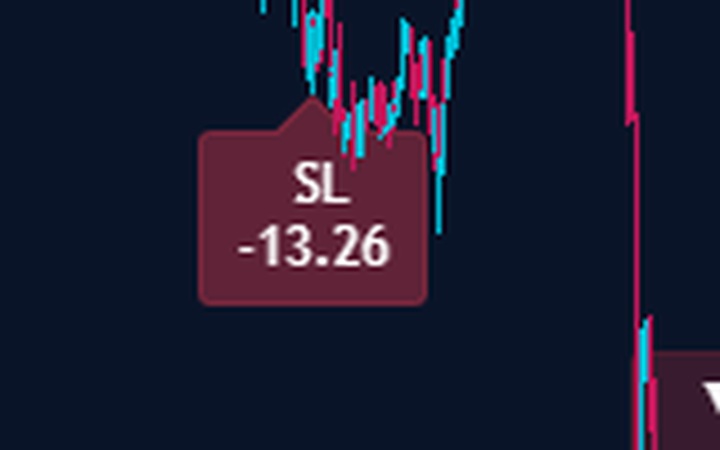
Both stops sit close to the entry and both third targets sit sixteen times further away. That ratio is the whole system. Eleven points at risk against a hundred and seventy-eight taken, on a decision made by measurement rather than opinion.
This is the whole design, and it is the opposite of how most systems are built. The exposure is decided by you, in advance, and it never moves. What the position can return is decided by the market and is deliberately left uncapped — the third target sits sixteen times the stop distance away, and the system will hold half the position all the way there.
The ratio is set by the rule, not by the trade. The system never negotiates with a target and never tightens a level to feel better about a position.
If the regime says participation is absent, the setup is skipped even when the geometry is perfect.
If price closes beyond the range instead of returning inside, that is real momentum. The system stands aside.
If the computed stop sits within normal movement, the trade is rejected. A stop the spread can reach is not risk management.
One position at a time. Doubling into a move already running is how a good day becomes a bad month.
| Instruments | XAUUSD · NAS100 — session-bound by design |
| Execution timeframe | 5m |
| Structure | Overnight range, sweep of it, and the reaction candle |
| Entry | The candle after the sweep completes, never the sweep itself |
| Volatility model | Adaptive average true range, period selected by regime |
| Stop placement | Volatility multiple beyond the swept extreme |
| Target ladder | Three levels scaled from the same measured distance |
| Management | 25% / 25% / 50%, handled by the system |
| Execution | PineConnector alerts, separate channel per side |
| Indicators used | None beyond volatility — every signal comes from price structure |
| Operator input | None after arming |
The setup is created by session structure — a range built while the major desks are closed, then taken when volume returns. Gold and the New York open produce that cleanly. Forcing the same logic onto markets that never build it produces a worse version of a different edge.
Because the ratio is what the system is built around. Exposure is fixed at entry and the far target is a multiple of it — that geometry is the design, and every level on every chart here follows it.
No. Every decision is taken on a closed candle, which is why the signal you see in history is the one that fired at the time.
The risk settings are yours. The structural logic is not exposed — that is the part that took years to arrive at.
It runs live, every trading day, on the operator's own account — the same build, the same settings, nothing held back for a private version. Access opens in small numbers and closes again. The stream hears first.
CODE GOLD exists in both forms. Take the TradingView indicator and route it through PineConnector, or run the Expert Advisor directly in MetaTrader 4 or 5 with no chart and no bridge. The EA is a port of the indicator, not a reinterpretation of it — the same overnight range, the same sweep condition read on the closed candle, the same adaptive ATR stop and the same 25/25/50 ladder.
These are software tools, not financial advice, and nothing on this site is a recommendation, an offer or a promise of any result. Leveraged instruments are not suitable for everyone and you can lose some or all of the capital you commit. Charts shown here illustrate how the software marks a chart — they are not a performance record and past behaviour does not indicate future results. Every trading decision, and its outcome, is your own.