
The candle closes, the condition is confirmed, and entry, stop and three targets are printed on the chart — not suggested, not shaded, not left for you to interpret at the worst possible second. Twenty-five years of one operator's work, compiled into systems that run without him. This is what he trades. There is no second version.
Every system comes two ways: a Pine Script indicator for TradingView, executed through PineConnector, or an MQL Expert Advisor that runs directly on the broker in MetaTrader 4 and 5 — same signal, same levels, same risk logic. One per edge: session liquidity, volatility compression, order block breaks and optimal trade entry, each with adaptive ATR risk and a three-step target ladder.

Every tool on the market is built on averages of what already happened — moving averages, oscillators, smoothed momentum. They arrive late by construction, and a signal that arrives late is a signal you pay for.
These systems carry one measurement and nothing else: volatility. Everything else is read directly from price — structure, the levels institutions leave behind, and the moment they are taken. Nothing is smoothed, so nothing lags.
The levels the market will reach for are marked before it moves — not because the direction is forecast, but because that is where the orders are resting. When price arrives, the system is already there with entry, stop and targets set.
The moment a condition completes, volatility is measured, the stop distance is derived, size follows the stop and three targets are placed. No hesitation, no recalculating under pressure, no chart that looks convincing enough to bend a rule.
Every signal fires as a PineConnector alert and reaches the terminal as an order with stop and targets attached, managed 25/25/50 to the close. From condition to filled position with nobody at the screen.
Every system exists in both forms. Take the TradingView indicator and route it through PineConnector, or run the Expert Advisor directly in MetaTrader with no chart and no bridge. Same condition, same levels, same risk ladder.
The setup is marked where you already work — entry, stop and the three targets on the chart — and each signal fires as a PineConnector alert that reaches the terminal as an order with stop and targets attached.
Runs in the terminal on its own — no TradingView, no PineConnector, no third-party bridge. Same closed-candle condition, same adaptive ATR stop, same 25/25/50 ladder, attached to the chart and left alone.
The market is full of tools that colour a candle and print an arrow. What none of them carry is the part that decides whether the trade is worth taking, how much of the account it uses, where it exits, and how it gets to the broker.
Late is a price. You pay it on every entry. These systems remove the part of trading where the money is actually lost — the seconds between seeing the setup and committing to it.
They are built to trade, not to observe. Armed once and live in every session the market is open, deciding on closed candles whether anyone is watching or not — through the London hours, the New York open, the overnight drift and the days you are away from the desk. An indicator waits for you to notice it. These do not wait for anybody.
Every signal arrives with the full ladder attached and a management state that runs to the close — 25% / 25% / 50%, tracked on the chart. Not an arrow you then have to interpret.
Stop distance is derived from what the instrument is actually doing at that moment, not a fixed number of pips carried over from a different market on a different day.
The same rules, the same ladder and the same behaviour from five-minute charts to daily — shown on this site across all of them rather than tuned for one demonstration symbol.
Each signal fires as a PineConnector alert carrying stop and targets, so the position exists at the broker with nobody at the screen. Signal, risk, order and management are one system, not four things you assemble yourself.
You never have to decide at the worst second. Every rule is stated on this site and every level is on the charts. There is nothing here that cannot be checked against your own instrument before you decide.
Built for traders who intend to change how they trade, not add one more tool to a chart that already has nine. If you have read this far and recognised the inversion, you are the reader this was written for.
The retest is taught everywhere and the crowd is positioned there. That is precisely why price goes through it. The inversion is on the OB Breaker page, in full, with the refused signals counted on screen.
Entry, stop and three targets exist before price arrives. When the condition completes there is nothing left to decide, nothing to measure and nothing to argue with.
What you see in history is what fired at the time, on a closed candle. Load it on your own chart and the behaviour is identical to every capture on this site.
One measurement enters the engine: volatility. Everything else is read straight from structure — so nothing arrives late by construction.
Each one states what it reads, what it requires and what it refuses to touch. There is no product here invented to fill a page, and no feature here that does not decide a trade.

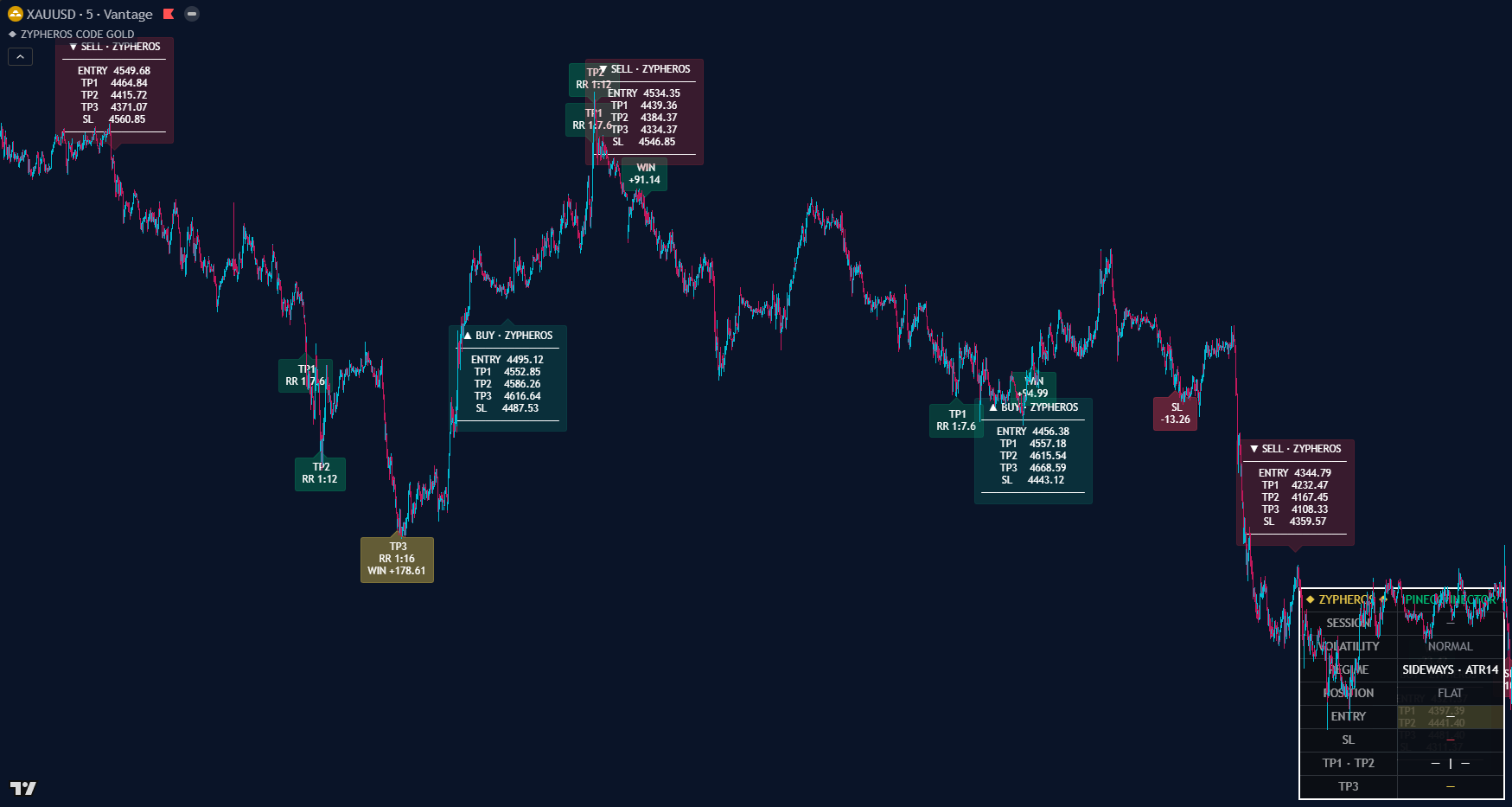
The overnight range is marked and frozen while the desks are closed. When volume returns and price reaches for the stops beyond the edge, the system is not looking for a setup — it is waiting on one that was defined hours earlier, and it prints entry, stop and three targets on the candle that confirms it. Adaptive ATR sizing, 25/25/50 management, PineConnector execution. Zero to three decisions a day, and none of them yours. Built on gold, identical on the New York index open.

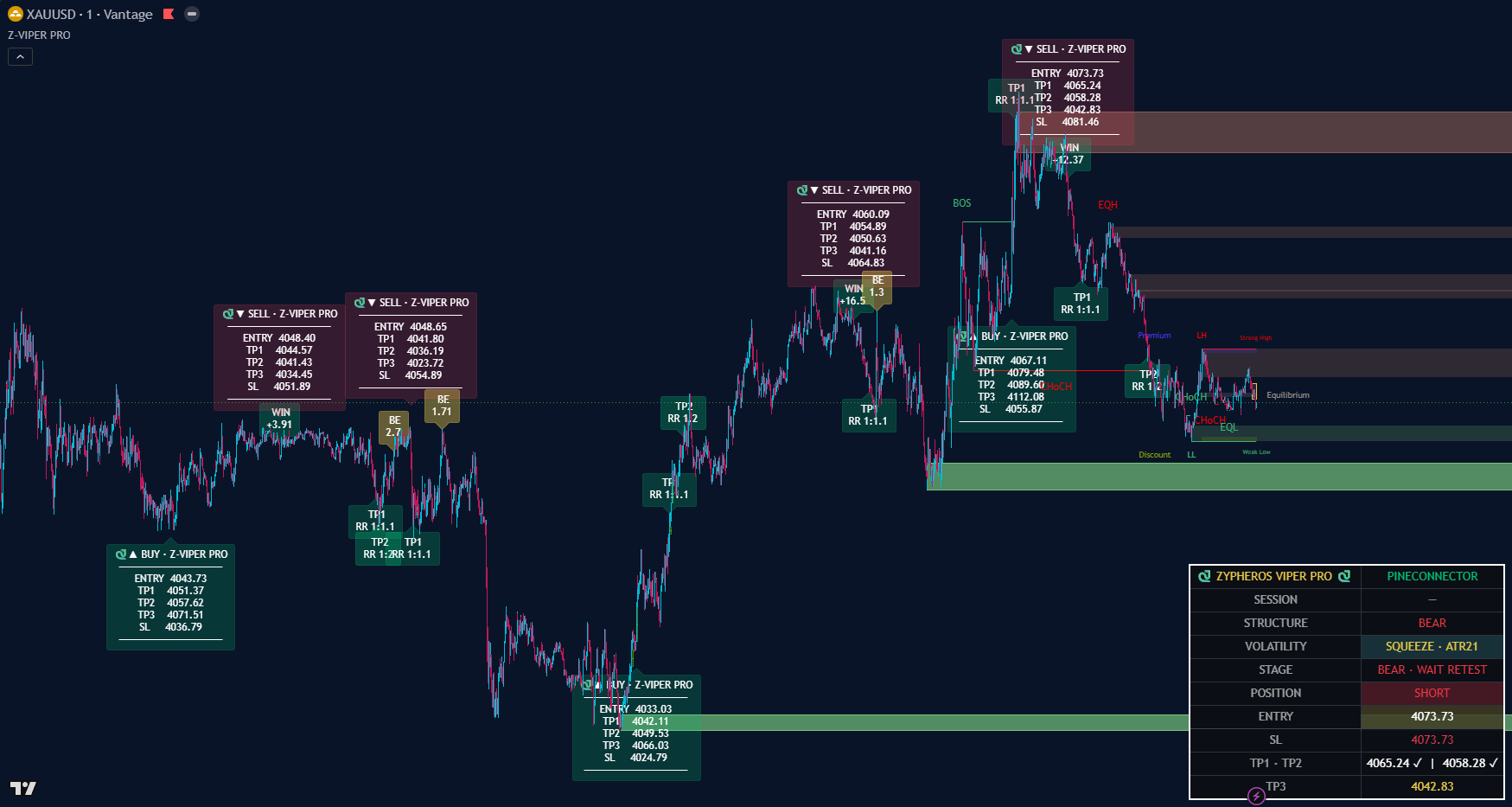
Live compression state, two-degree structure with break-of-structure and change-of-character tagging, order blocks, fair value gaps, liquidity pools and a premium/discount map — and the entry marked on the correct side of the failed break, next to the invalidation rather than chasing the reversal. Same risk, better ratio. Full ladder, live position panel, PineConnector execution. It has no session and no favourite instrument, because compression is what every market does when both sides stop committing.

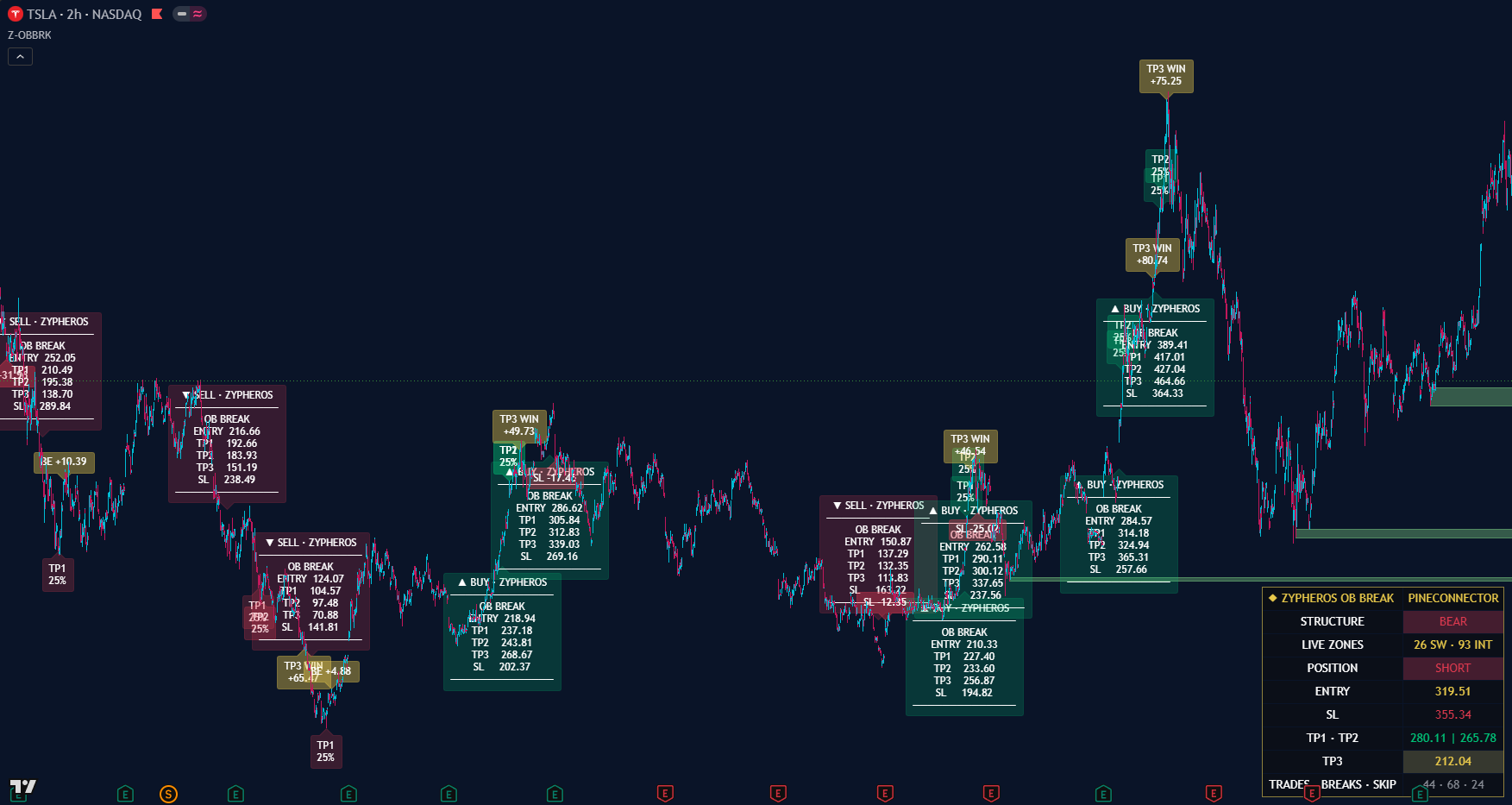
Order blocks detected at two structural degrees, with the entry on the break rather than the retest — because the zone is not defended, it is consumed. Three switchable modes so the textbook version can be measured against it on the same data instead of argued about. Adaptive ATR risk, 25/25/50 management, and every refused signal counted on the dashboard so the cost of every rule is visible. Shown here on oil, TSLA, NVDA, USDJPY and Bitcoin, five minutes to daily, on the same settings.

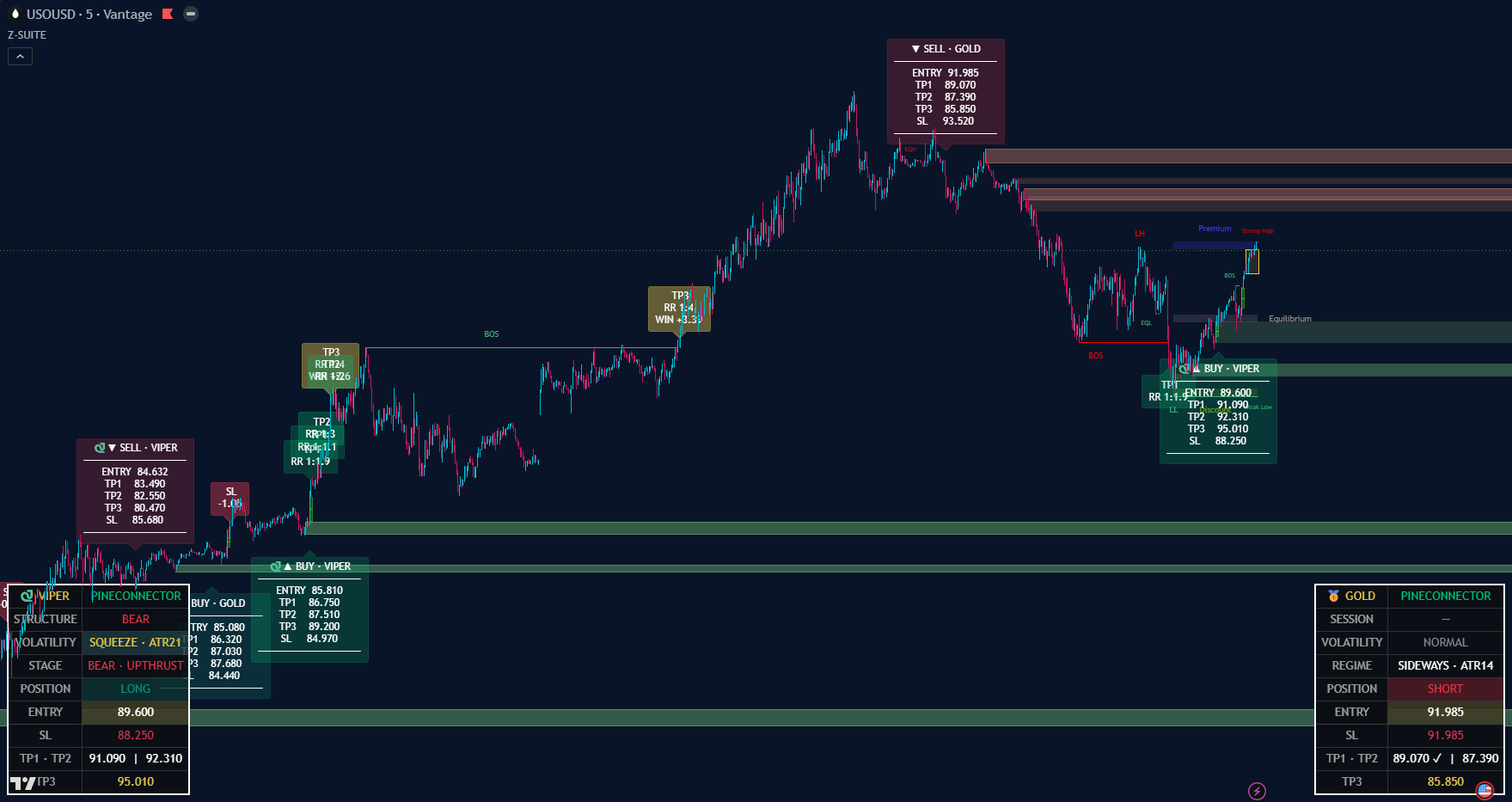
Session and compression side by side with independent detection, risk, management state and execution channel — long from one engine and short from the other at the same moment, with neither able to touch the other's position. Adds the order-block engine in three switchable modes across swing and internal degrees, every refusal counted. When the session is dead the compression engine is working; when nothing coils, the session engine is already positioned. Oil, indices, equities, currencies and Bitcoin, five minutes to daily.

The retracement of the working leg, drawn as it forms, with the entry held back until a close proves the turn: either out of the zone with the leg, or back through the deep edge after the sweep has taken it. Structural invalidation, one position at a time, and every refused setup counted on the panel.
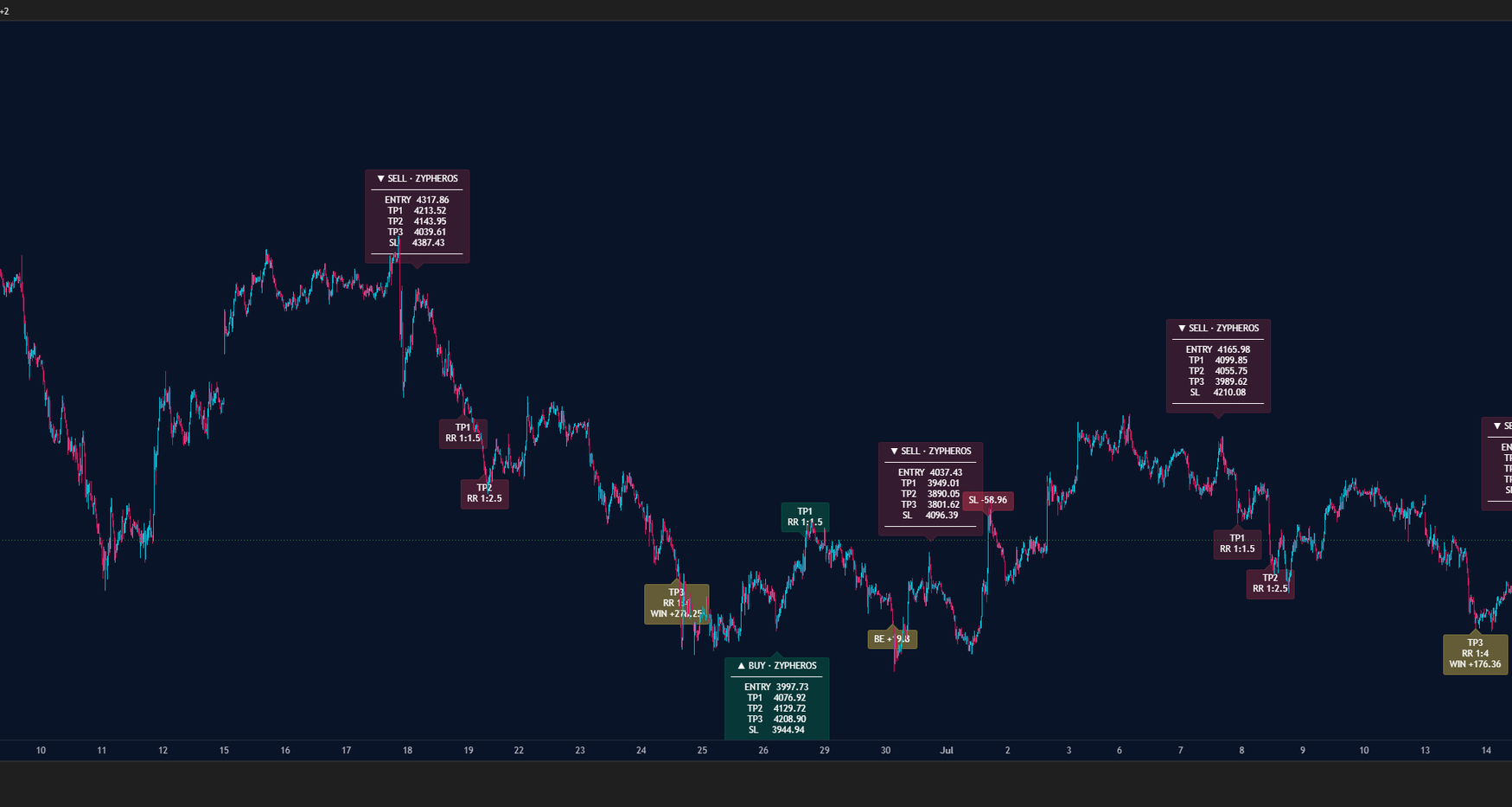
Private accounts stay private. What is published instead is the systemry — what each tool reads, what it demands before it acts, what it discards, and exactly what it prints when it fires. Load it on your own chart and the behaviour is the same as every capture on this site.
Shown across oil, an index, equities, currencies and Bitcoin — five minutes to daily. Same rules, same ladder, same behaviour on every one of them. A trader who knows what they are looking at needs nothing further.
These are not licensed on demand. They run on one operator's own account, and access opens in small numbers, on his timing, to people who can read what is on these pages without needing it explained.
If you have read this far and recognised the inversion — that the retest is where traders are removed and the break is where the move begins — you already know why this is worth having before everyone else is taught it. When the gates open, the stream hears first, and it does not stay open long.
These are software tools, not financial advice, and nothing on this site is a recommendation, an offer or a promise of any result. Leveraged instruments are not suitable for everyone and you can lose some or all of the capital you commit. Charts shown here illustrate how the software marks a chart — they are not a performance record and past behaviour does not indicate future results. Every trading decision, and its outcome, is your own.