

Every optimal trade entry tool draws the same zone on the same leg, and signals the moment price touches it. That touch is the worst fill in the sequence — it is the one moment the market has not decided anything yet. This one draws the zone as a question and waits for the answer.
Structure defines the leg. A swing taken out above the one before it turns the book, and the leg is anchored from the origin of that move to its extreme. The retracement of that leg is where the move gets rebuilt — not where it ends.
Price trading into that zone changes one thing: the state goes to armed. Nothing is bought, nothing is sold. Everything that reaches the zone and keeps going is an invalidation, never an entry.
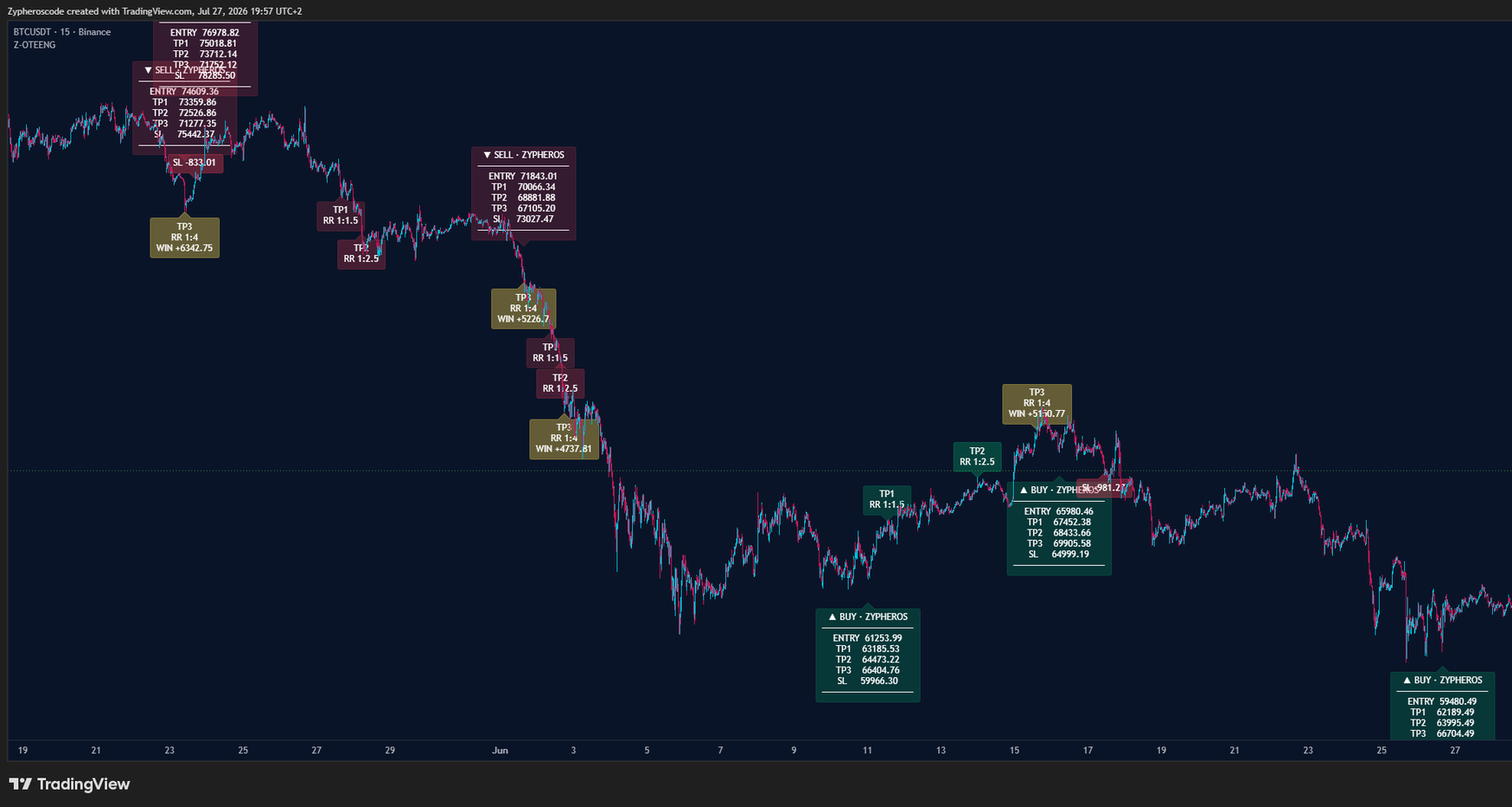
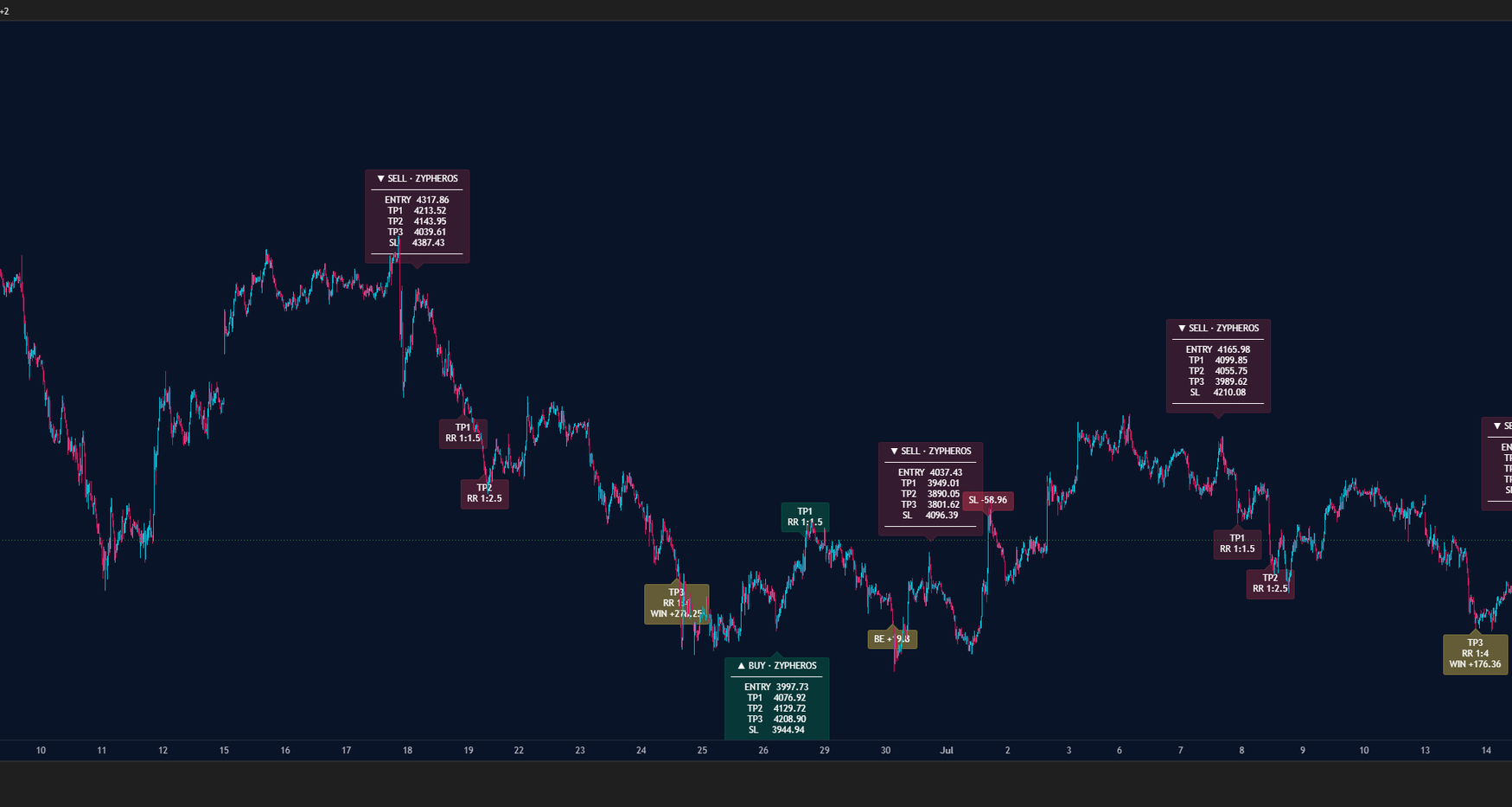
The zone is the same in both. What differs is what the market has to do before the system will commit to it — and that is the operator's choice, not a hidden preference baked into the code.
The position opens on the close that leaves the zone in the direction of the leg. The market has to show it is going back the way it came before anything is committed. This is the patient side of the model: fewer entries, each one already moving.
The zone itself is treated as liquidity. The deep edge has to be breached first — the stops under it taken — and the position opens only on the close that reclaims that level. The entry sits where the sweep proved itself, not where it started.
The leg decides the side. The zone decides where. The close decides whether it happens at all.
Confirmed swings only. The leg extends while the trend keeps printing new extremes, and re-anchors the moment the book turns.
Price trades into the retracement band and the setup goes to armed. Armed is not a position — it is permission to look for one.
Confirmation or Sweep Reclaim, whichever mode is running. No close, no proof, no trade — the zone can be visited all day and never fire.
A close beyond the origin of the leg ends the setup outright. The system stands down and waits for the next leg to form.
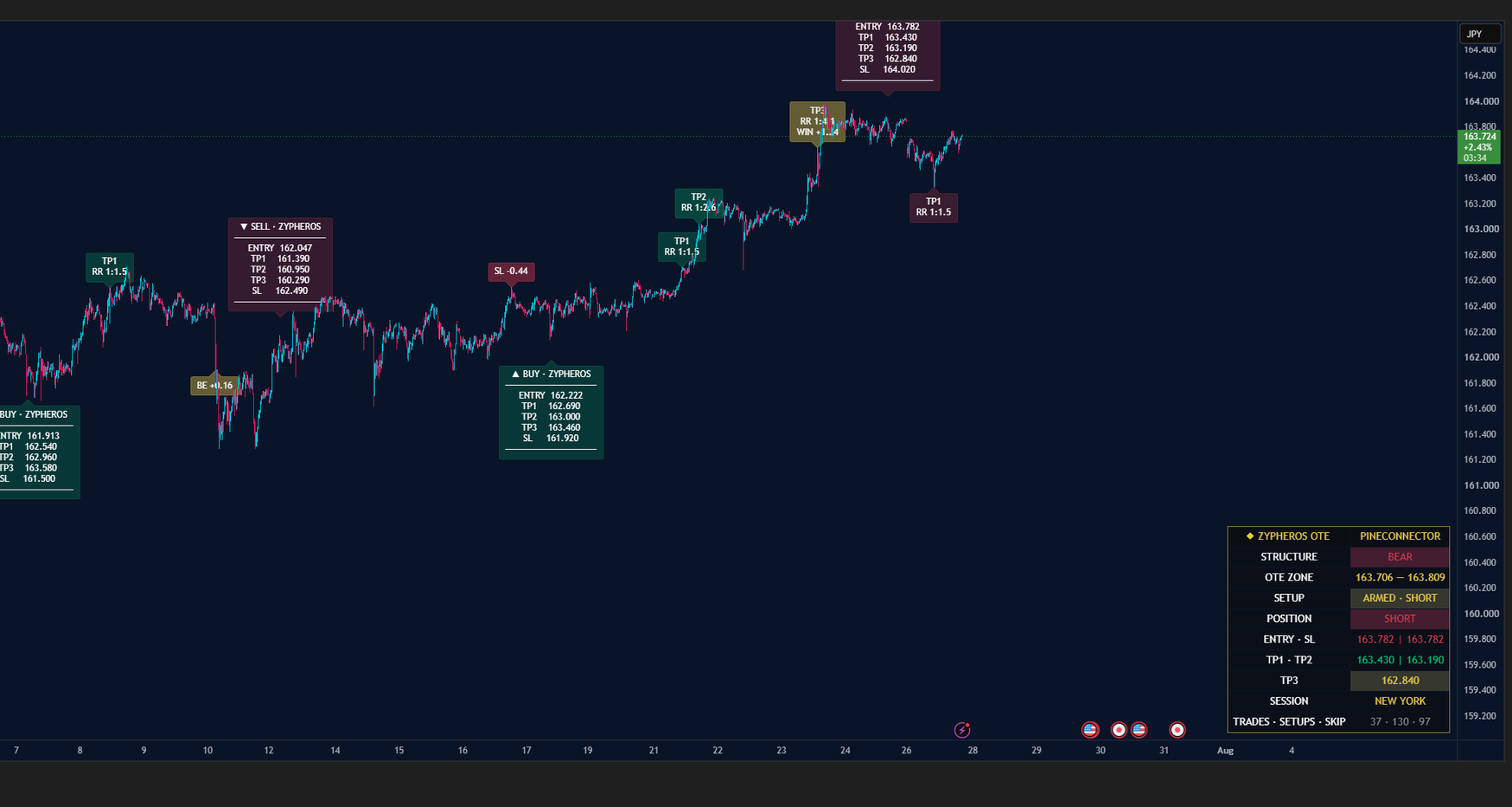
The on-chart panel carries structure state, the live zone, the setup state, the open position with every level, the active session — and three counters: trades taken, setups seen, setups skipped. You can see what the system passed on, not only what it took.
The exposure is one multiple of measured volatility, set on the candle that opened the position and never widened afterwards. What the position can return is left open, and half of it is still working at the far target.
Arriving in the zone is not a reason to trade. Without a close that proves the turn, nothing opens.
Once price closes beyond the origin, the setup is dead. It is not re-armed, re-drawn or given a second chance.
One at a time. Setups that arrive while a position is open are counted and shown, never taken quietly.
With session gating armed, a valid setup outside an active window is refused — and the refusal is on the panel, not hidden.
| Instruments | Any — the model is structural, not instrument-bound |
| Timeframes | 1m and above |
| Structure | Confirmed swings, leg anchored and extended with the trend |
| Zone | Retracement band of the active leg, drawn as it forms |
| Entry modes | Close that proves the turn — confirmation out, or reclaim after the sweep |
| Invalidation | Structural: a close beyond the origin of the leg |
| Stop placement | Volatility multiple from entry, fixed at the open |
| Target ladder | Three levels scaled from the same measured distance |
| Management | 25% / 25% / 50% with breakeven at the first target, handled by the system |
| Sessions | Asia, London and New York windows — visual, or a hard gate on entries |
| Execution | PineConnector alerts — entries, partials, breakeven and closes |
| Indicators used | None beyond volatility — every signal comes from price structure |
| Operator input | None after arming |
Because at the touch the market has not decided anything yet. Everything that reaches the zone and keeps going looks identical to everything that reaches it and turns — until it turns. The system waits for that difference to exist.
Confirmation waits for strength: the position opens on the close that leaves the zone in the direction of the leg. Sweep Reclaim waits for the trap: the deep edge must be taken out first, and the position opens only on the close that takes it back.
A close beyond the origin of the leg. That is structural, not a distance — the reason for the trade is gone, so the setup is gone with it.
No. The leg is built from confirmed swings and every entry is evaluated on a closed candle.
It runs live, every trading day, on the operator's own account — the same build, the same settings, nothing held back for a private version. Access opens in small numbers and closes again. The stream hears first.
The OTE ENGINE exists in both forms. Take the TradingView indicator and route it through PineConnector, or run the Expert Advisor directly in MetaTrader 4 or 5 with no chart and no bridge. The EA is a port of the indicator, not a reinterpretation of it — the same retracement zone, the same proof close, the same structural invalidation, the same adaptive ATR stop and the same 25/25/50 ladder.
These are software tools, not financial advice, and nothing on this site is a recommendation, an offer or a promise of any result. Leveraged instruments are not suitable for everyone and you can lose some or all of the capital you commit. Charts shown here illustrate how the software marks a chart — they are not a performance record and past behaviour does not indicate future results. Every trading decision, and its outcome, is your own.