

Two complete edges on one chart, each blind to the other. When the session is dead the compression engine is working; when the market never coils, the session engine is already positioned. Separate detection, separate risk, separate management, separate execution channel — long and short can run at the same moment and neither can touch the other. Most days one of them has something. That is the entire point.
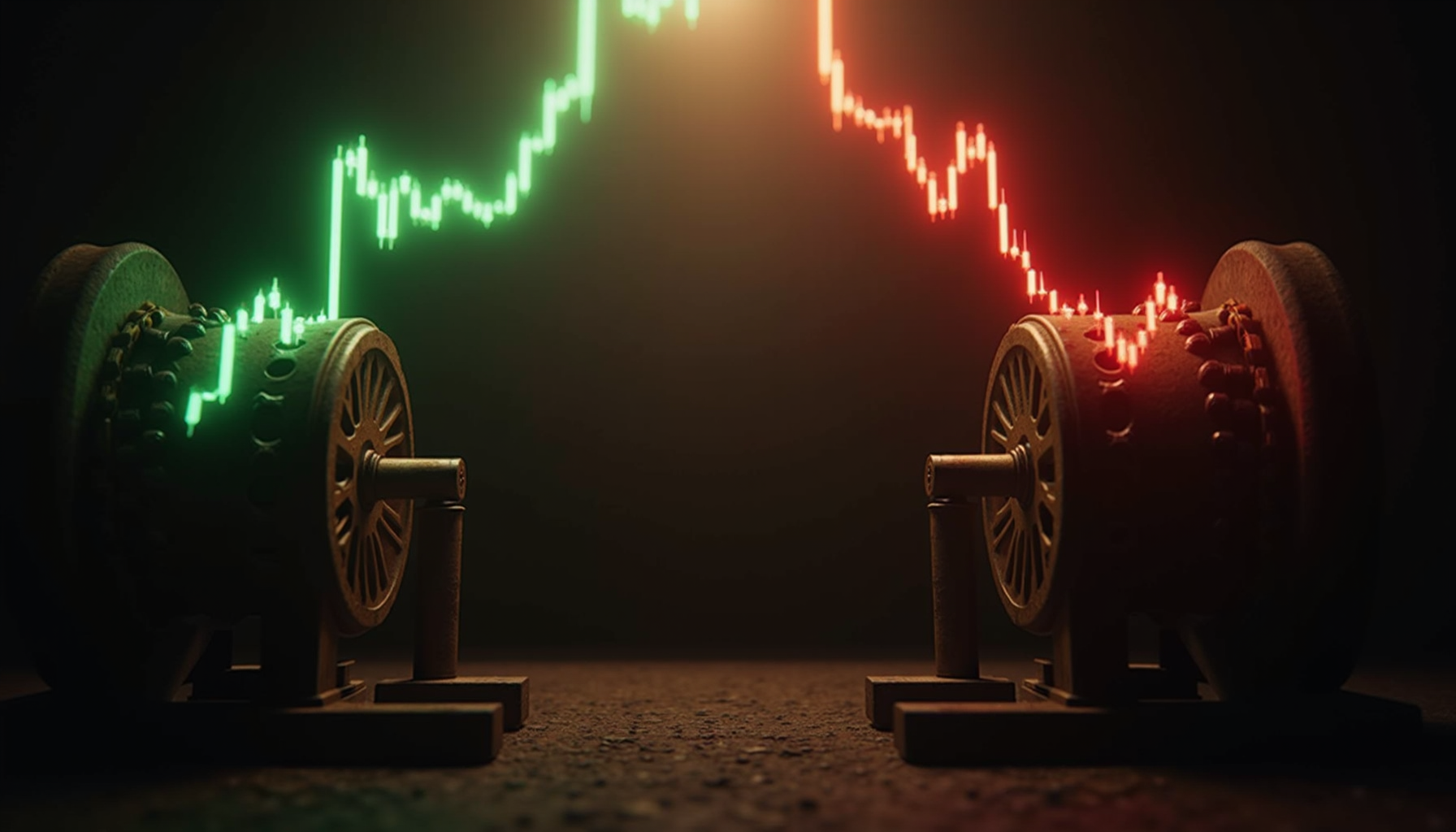
The session system needs a clock — a range built overnight and taken when volume returns. The compression system needs the market to go quiet, wherever and whenever that happens.
Neither condition appears every day, and they rarely appear together. Running both means the chart is covered by whichever one the market is currently offering, without either being forced to trade in conditions it was not built for. Two independent edges, each firing in the conditions it was built for — not one edge stretched by a wider filter.
Every course teaches the order block as a zone that holds — buy the retest, sell the retest. Measured on real data, almost every block is consumed instead: price touches it and goes straight through.
So the break is the signal, not the zone. A bullish block breached downward opens a short; a bearish block breached upward opens a long. The retest is where most participants are being removed from the market, which is precisely why it is not an entry.
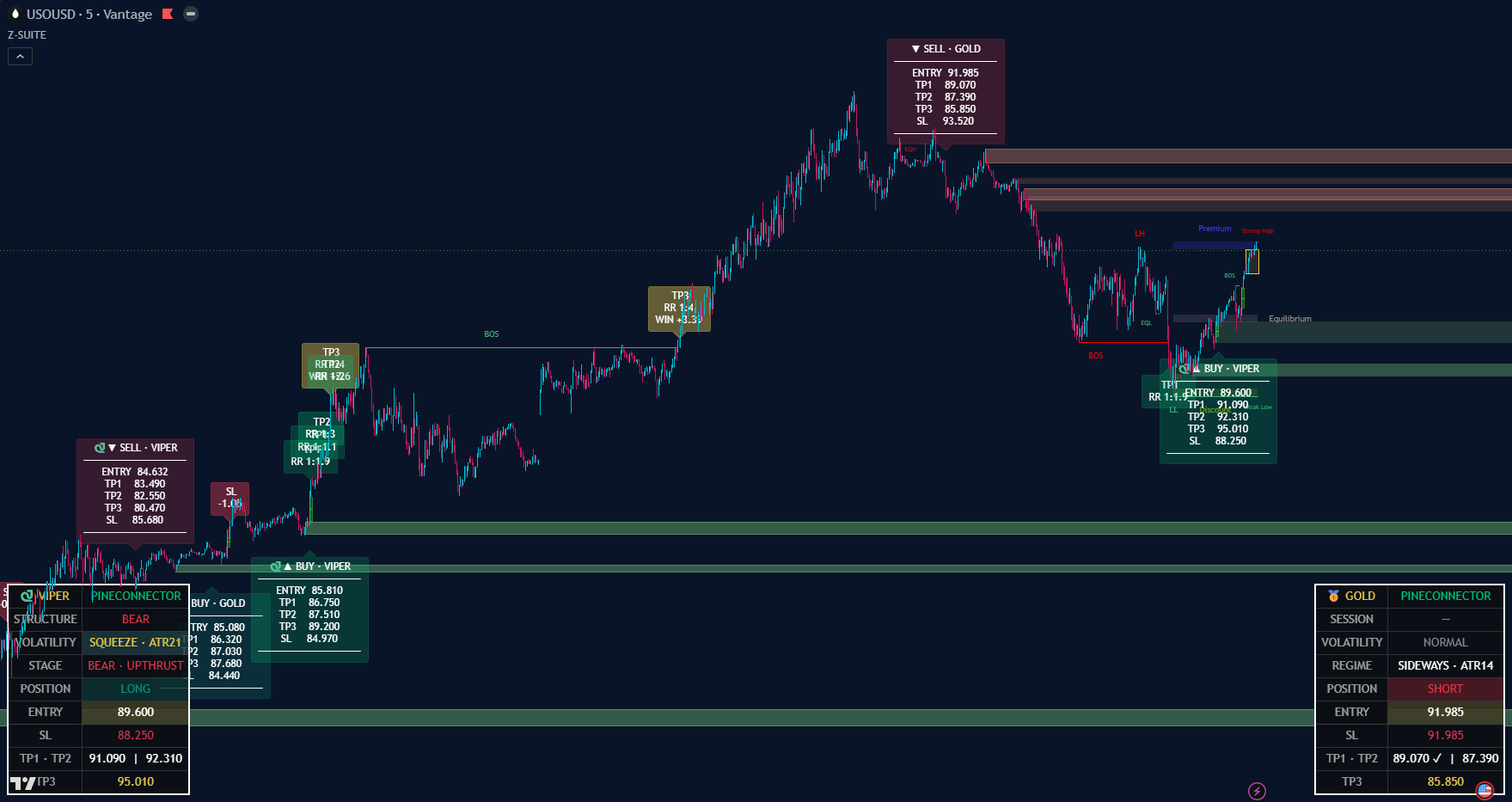
This is what complete isolation means in practice. One engine is long, the other is short, neither knows the other exists, and closing or reversing one cannot touch the other.
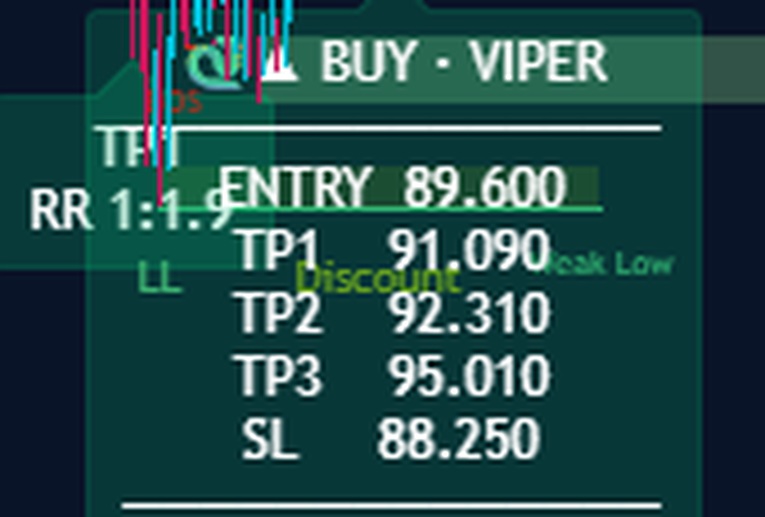
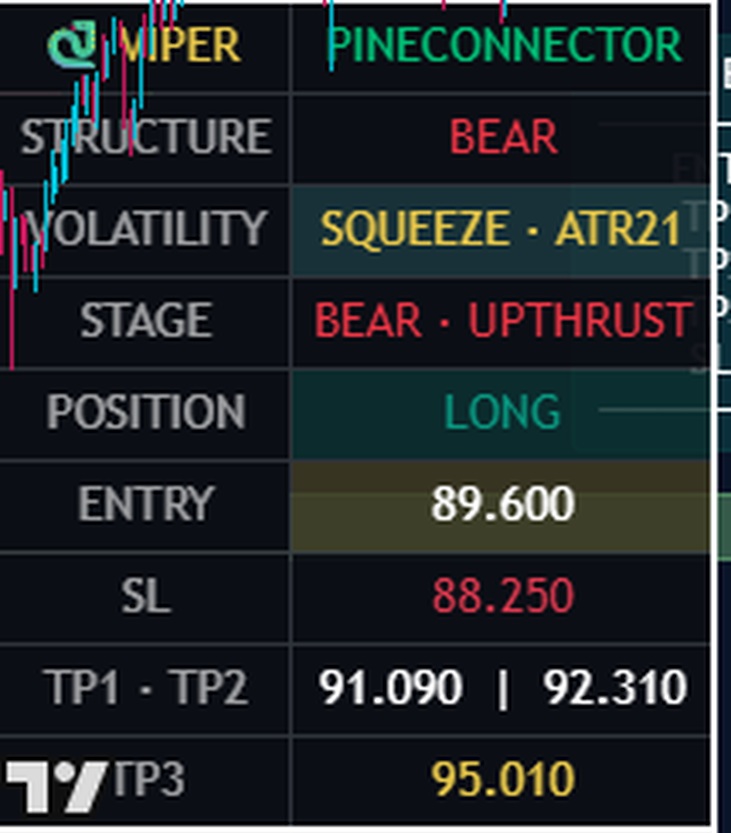
Each engine carries its own panel: structure, volatility state, stage, the open position and every level it is working toward. Both captured at the same moment, on the same chart.
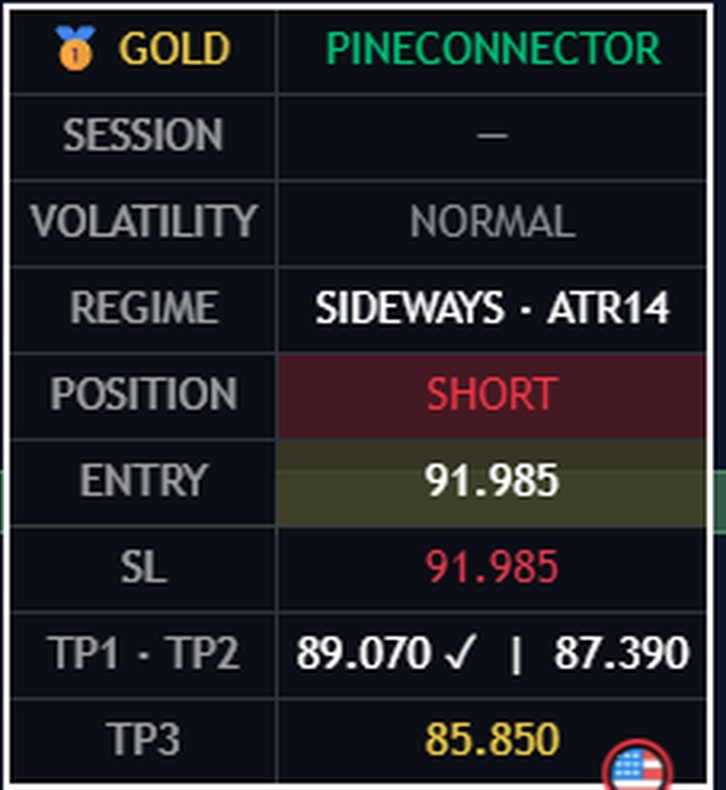
Oil, an index, an equity, a currency, Bitcoin — one unit of exposure fixed at entry, targets stacked as multiples of that same unit. The instrument changes, the volatility changes, the shape of the bet never does.
Refused, counted, and displayed. The dashboard shows how many were skipped so the cost of that rule is never hidden.
One position is taken, the rest are counted. Ten entries on one impulse is not diversification.
With the trend gate armed, anything facing the wrong way is discarded regardless of how clean it looks.
If the computed distance sits inside normal noise, the position never opens.
| Instruments | Any |
| Timeframes | 1m to daily |
| Engines | Session · Compression — independent detection and state |
| Structure | Two degrees, break of structure and change of character |
| Entry modes | Break · Retest · Straddle |
| Stop placement | Volatility multiple from entry |
| Target ladder | Three levels scaled from the same measured distance |
| Management | 25% / 25% / 50% |
| Execution | PineConnector alerts, separate channel per engine and per side |
| Indicators used | None beyond volatility |
| Operator input | None after arming |
Because the zone is not defended, it is consumed. The orders resting inside it are what price came for. Once they are filled the move continues — which is why entering the zone is standing in front of it.
So it can be measured on the same data instead of argued about. A setting that can be switched off is worth more than a claim.
The losing side pays one unit and stops. The surviving side can reach sixteen. The arithmetic is in the ladder, not in picking a direction.
No. Separate detection, separate state, separate execution channel. One reversing cannot touch the other's position.
It runs live, every trading day, on the operator's own account — the same build, the same settings, nothing held back for a private version. Access opens in small numbers and closes again. The stream hears first.
The SUITE exists in both forms. Take the TradingView indicator and route it through PineConnector, or run the Expert Advisor directly in MetaTrader 4 or 5 with no chart and no bridge. The EA is a port of the indicator, not a reinterpretation of it — both engines, the same conditions read on the closed candle, the same adaptive ATR stop and the same 25/25/50 ladder, with the isolation between engines intact.
These are software tools, not financial advice, and nothing on this site is a recommendation, an offer or a promise of any result. Leveraged instruments are not suitable for everyone and you can lose some or all of the capital you commit. Charts shown here illustrate how the software marks a chart — they are not a performance record and past behaviour does not indicate future results. Every trading decision, and its outcome, is your own.