

No clock, no favourite instrument, no opinion. It waits for the market to go quiet, for someone to reach outside that quiet and fail, and it takes the other side of that failure — at the level where the trapped traders have to get out. Point it at anything that breathes and it behaves the same way.
Volatility contracts. Range narrows. Both sides get bored and the orders that remain stack just outside the box that everyone can now see.
Then someone reaches for them — a break that has no participation behind it. Price closes back inside within a bar or two, the breakout traders are already wrong, and their exits become the fuel for the move the other way. The system never trades the break. It trades the return.

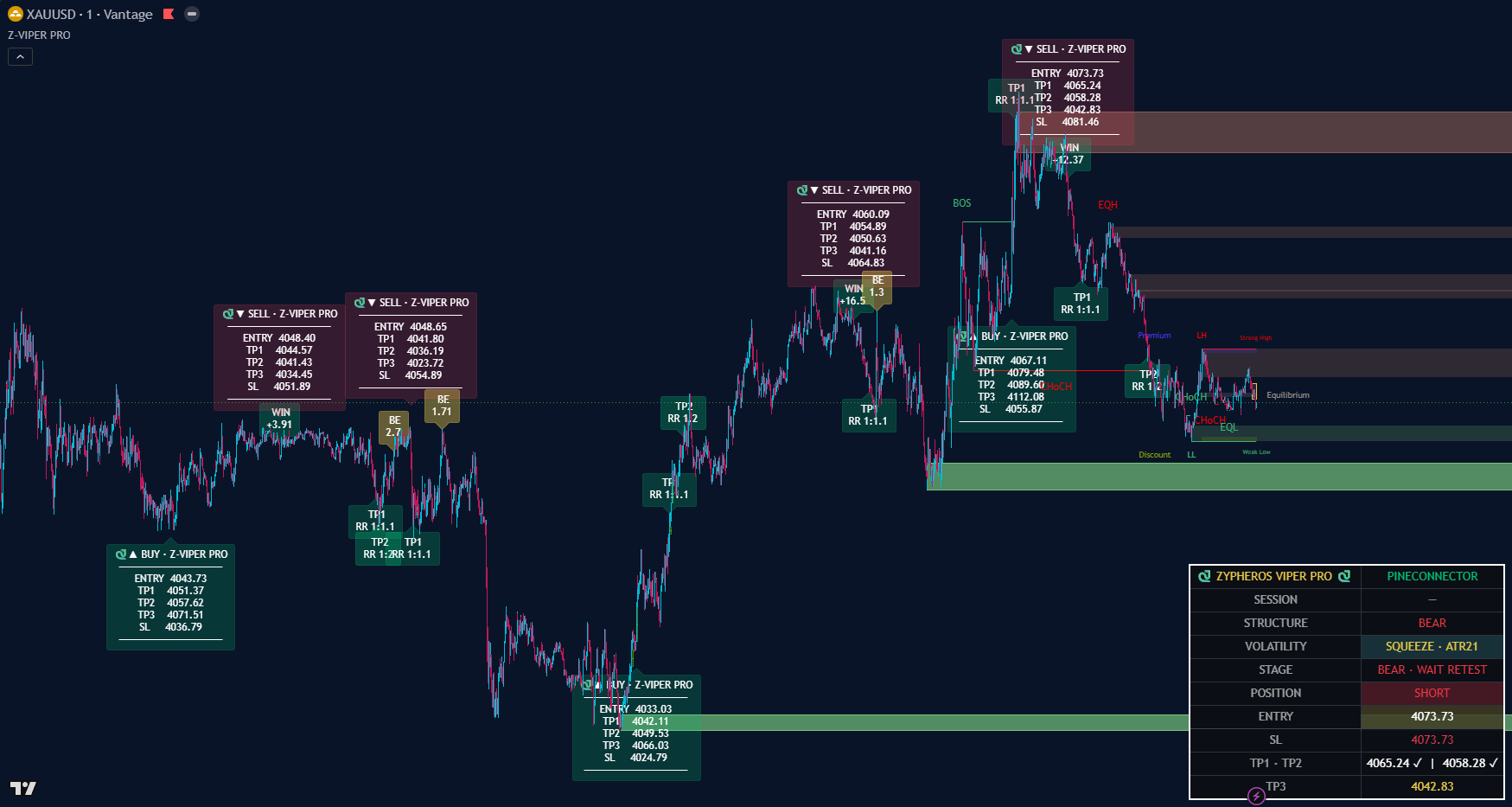
Nothing is revealed later. Entry, stop and all three targets are printed on the candle that triggered the position — the numbers below were on the chart before the market moved.
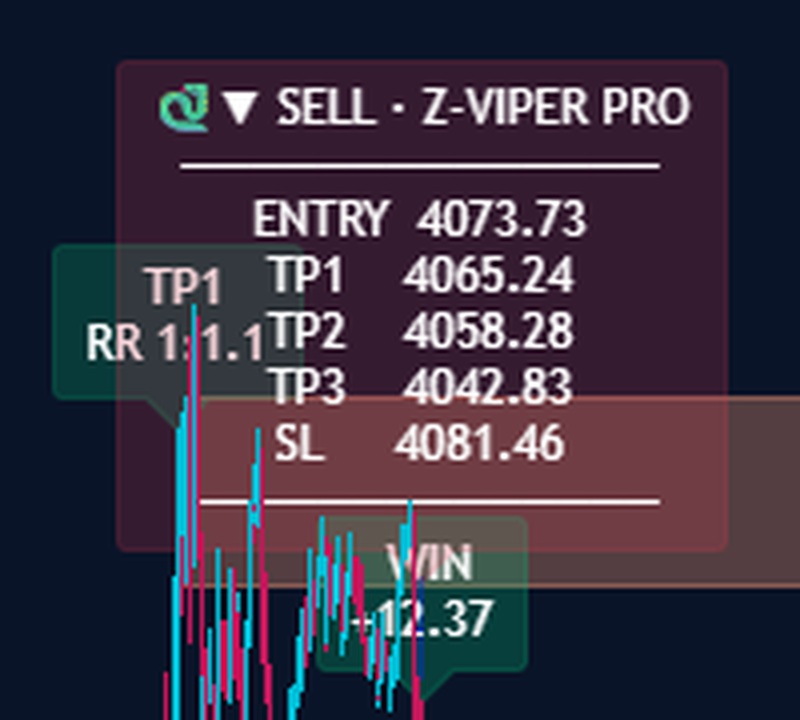
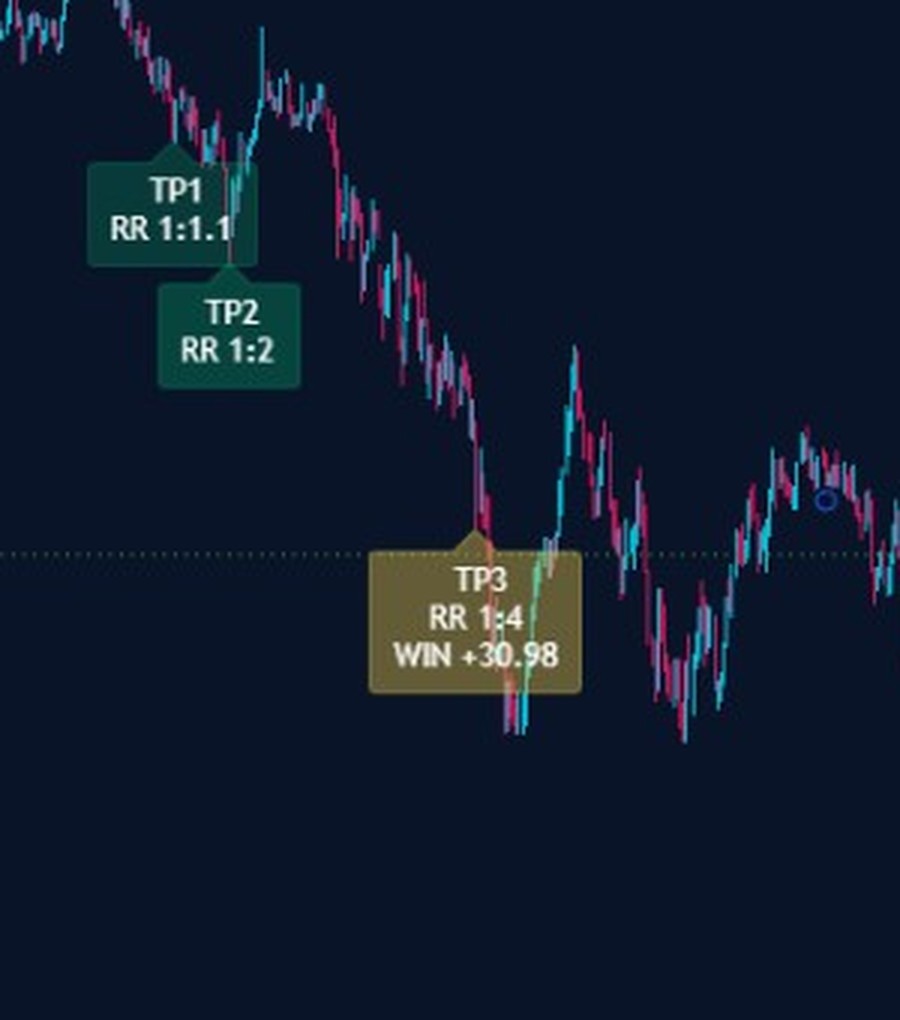
Structure decides the side. Compression decides whether there is anything to trade at all.
Break of structure and change of character are tracked at two degrees. The system never takes a trade against what the higher degree is doing.
A short average range against a longer one. Below the threshold the market is coiled — above it, there is nothing here worth waiting for.
Price leaves the box and fails to hold. That failure is the signal: the participants who committed to the break are now trapped on the wrong side.
The system does not chase the reversal. It waits for price to come back to the edge it just failed at, and enters there — closer to the stop, further from the target.
Session, structure, volatility state, stage, position, entry, stop, and every target with a tick against the ones already taken. The panel below was captured mid-trade.
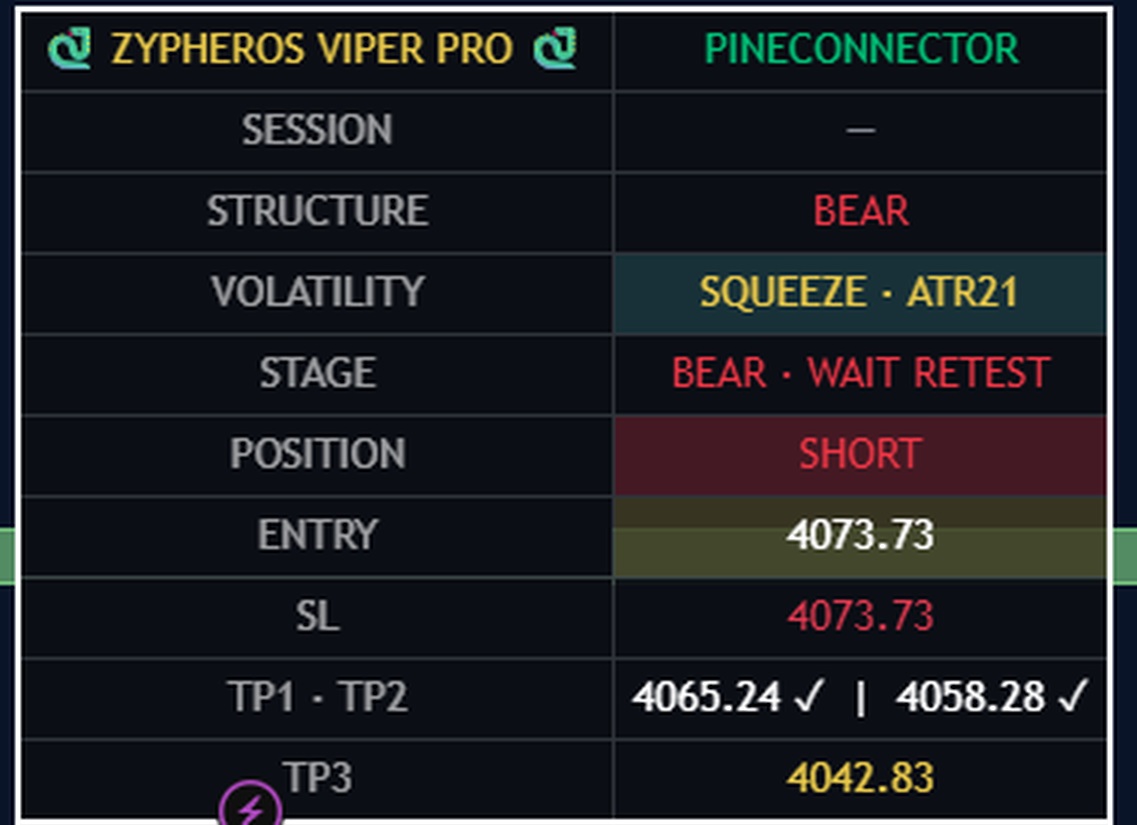
The exposure is one multiple of measured volatility, set before the position exists and never widened. What the position can return is left open — the third target sits sixteen of those multiples away, and half the position is still working when it gets there.
If range is already wide there is no box, no trapped side, and nothing to fade. The system waits.
If price closes and stays outside, that is a real breakout. It is left alone rather than faded.
The setup expires after a fixed number of bars. A move that runs without you is not chased.
With the structure gate armed, a signal facing the wrong way is discarded regardless of how clean it looks.
| Instruments | Any — the setup is behavioural, not session-bound |
| Timeframes | 1m and above |
| Structure | Two degrees, break of structure and change of character |
| Compression model | Fast average range against slow, threshold-gated |
| Entry | Retest of the failed break, never the break itself |
| Stop placement | Volatility multiple beyond the failed extreme |
| Target ladder | Three levels scaled from the same measured distance |
| Management | 25% / 25% / 50%, handled by the system |
| Execution | PineConnector alerts, separate channel per side |
| Indicators used | None beyond volatility — every signal comes from price structure |
| Operator input | None after arming |
Because compression is not a property of gold or of a session — it is what any market does when both sides stop committing. Wherever that happens, the same trap forms.
The retest puts the entry next to the invalidation level. Same target, smaller risk, better ratio — and the trades that never come back were never worth the wider stop.
No. Compression, break and retest are all evaluated on closed candles.
On a one-minute chart, several a session. On higher timeframes, a handful a week. The system does not manufacture setups to stay busy.
It runs live, every trading day, on the operator's own account — the same build, the same settings, nothing held back for a private version. Access opens in small numbers and closes again. The stream hears first.
VIPER exists in both forms. Take the TradingView indicator and route it through PineConnector, or run the Expert Advisor directly in MetaTrader 4 or 5 with no chart and no bridge. The EA is a port of the indicator, not a reinterpretation of it — the same compression state, the same failed break read on the closed candle, the same adaptive ATR stop and the same 25/25/50 ladder.
These are software tools, not financial advice, and nothing on this site is a recommendation, an offer or a promise of any result. Leveraged instruments are not suitable for everyone and you can lose some or all of the capital you commit. Charts shown here illustrate how the software marks a chart — they are not a performance record and past behaviour does not indicate future results. Every trading decision, and its outcome, is your own.